From 1845 to 1849, Ireland experienced one of the most significant chapters in its history: the Great Famine. Commonly referred to as the Irish Potato Famine, Phytophthora infestans, a type of water mould, infected potato crops around the nation and rotted them from the inside out.

The event provided a stark lesson on how reliant humans are on crops. Approximately one million Irish died and a further one million emigrated, leading to the nation’s population immediately falling between 20 to 25 per cent. It took more than a century for Ireland’s population figures to recover.
According to World Coffee Research’s (WCR) latest study on genetic diversity, Arabica coffee plants are one of the least genetically diverse major crop species in the world – meaning the coffee industry may face similar threats in the future.
“Researchers have known for a long time that the genetic diversity of Arabica coffee is low. This [WCR’s recently released] paper provides clear, definitive evidence that the diversity is even lower than we thought,” says Jennifer Vern Long, CEO of WCR.
“This is tremendously concerning for a crop as important as coffee. It reveals a profound vulnerability for any business that depends on coffee.”
WCR led the study to decode the genetic history of Arabica along with The French Agricultural Research Centre for International Development (CIRAD) and Instituto di Genomica Applicata (IGA), in collaboration with the Italian Universities of Trieste, Udine, Padova and Verona and with key contributions from CATIE, the University of Sana’a in Yemen, Texas A&M University. The study was funded by leading Italian coffee companies illycaffè and Lavazza for the purpose of enhancing scientific knowledge to ensure the future of coffee agriculture.
“The study was partly based on modulisation and predictions. It was the first study to use genotyping-by-sequencing (GBS),” says Lucile Toniutti, WCR Advanced Research Manager.
GBS uses restriction enzymes to split DNA into fragments to discover genetic mapping. The sequence was completed on a Red Bourbon plant and researchers analysed the GSB data for 736 Arabica plants.
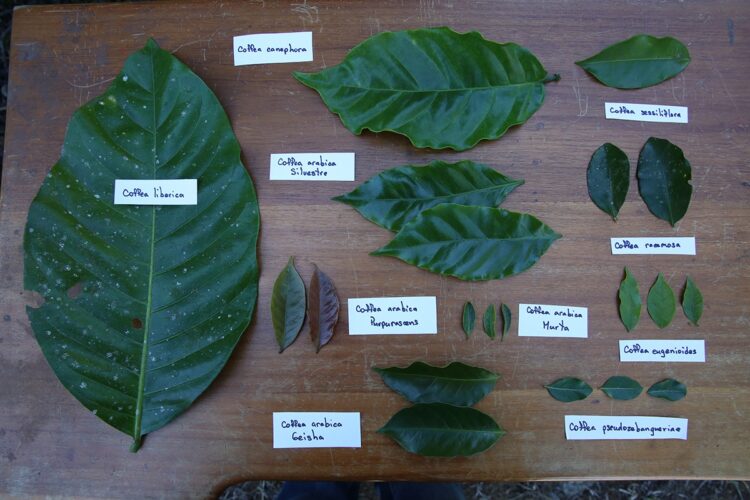
The study concluded that with a significant likelihood, Arabica derived from a spontaneous coupling of two species, Coffea canepohra and Coffea eugonioides. This would mean the billions of Arabica trees in existence today derive from a single plant that existed an estimated 10,000 to 20,000 years ago.
WCR says key threats to Arabica coffee include climate change, heat, drought, and leaf rust, making the species “extremely vulnerable”.
“If an epidemic breaks out, think of a new disease emerging like COVID-19 but for coffee, it has the potential to kill all varieties of Arabica because they are so similar. All these plants are susceptible to the same threats,” Toniutti says.
Coffee leaf rust, a fungus which attacks a coffee plant’s leaves, can lead to a drastic decrease in photosynthesis. This causes an affected plant to severely reduce its yield and, in some cases, die.
The most recent major outbreak of leaf rust occurred across Central America in 2012-14. According to Promecafe, the epidemic led to more than US$3.2 billion in damage and lost income, including more than 1.7 million coffee workers losing employment.
“The leaf rust epidemic of 2012-14 in Latin America was a canary in the coal mine [an advanced warning of impending danger]. It obviously didn’t wipe out Arabica coffee entirely, but it made a huge dent in epidemic regions,” says Hanna Neuschwander, Communications Manager at WCR.
Toniutti adds many approaches breeders use in other crops do not apply to Arabica due to its lack of genetic diversity. This means in the long term, the solution will lie in crossbreeding Arabica with other species of coffee, including wild coffee relatives.
In the short term, however, breeders are turning to the small reservoir of genetic diversity that does exist in Arabica, resulting in “F1 hybrids”, a name which derives from it being the “first generation” offspring of two distinct parent plants.
“When creating F1 hybrids you need to choose plants that are as different genetically as possible. The process utilises existing Arabica coffees that haven’t been much used in breeding before. Typically, breeders are using one parent of a common, widely cultivated coffee. In some cases, this includes rust resistant Arabicas from the Catimore or Sarchimor families that already incorporate some Robusta genetics and crossing them with another parent that is genetically distinct and has not been used before,” Toniutti says.
“In the long term, a similar approach may be taken to cross Arabica with other coffee species. There are almost 130 coffee species, so we need to cross-breed the Arabica with species that have a higher tolerance to factors like disease or drought.”
The tendency of crossbred plants to show superior qualities to both parents is known as ‘hybrid vigour’, a topic which Toniutti covered in her PhD.
“When doing crosses between Arabica and other coffee species, you want to maintain the genetic background of Arabica but just integrate some genes from other species. This means you may have to do several crosses which can take some time, so we are developing molecular markers to track important genes,” Toniutti says.
Disease resistance is a valuable trait for Arabica crops to develop, as are yield and cup quality. The rising impact of climate change, however, means that it is important for researchers to breed plants with the ability to produce high yield in a range of different climates, including tolerance to drought and heat.
“The threat of climate change is real and extremely serious. Arabica is not well-adapted to the kind of variability we are increasingly seeing in weather around the world. Without a reservoir of genetic diversity to tap into it’s harder to find the right tools to fight the disease,” Neuschwander says.
“The weather is so erratic in many places around the world now. Farmers need a plant that can handle heat one year, cool the next, and varied levels of dryness. Climate scientists are telling us that variability will be the biggest problem for coffee farmers overall. We need to increase the ability of Arabica to handle that variability.”
The first F1 hybrid varieties were created in 1997 by CATIE, CIRAD, and Promecafe, proving that it’s possible to produce genetically superior Arabica. WCR and others are proceeding with additional F1 hybrid breeding on the evidence of success of these earlier efforts.
According to Neuschwander, the definitive findings about Arabica’s limited genetic diversity should help give the coffee industry impetus to take the front foot in tackling these potential threats.
“To have this definitive evidence is meaningful – this is the kind of finding that mobilises action,” she says. “The good news is that breeding F1 hybrids that utilise Arabica’s existing but underexploited genetic diversity, and breeding with other species of the coffee family are both underway.”
For more information, visit www.worldcoffeeresearch.org