From its beginnings in wine to leaders in instant and RTD coffee production technologies, Flavourtech is blazing a global trail with processing systems for aroma recovery, extraction, and evaporation – all out of regional Australia.
It was an original quest to develop a solution to remove sulphur from grape juice that led Flavourtech – a leading manufacturer of food and beverage processing solutions – to carve out one of its most important niches today. The convenience coffee market.
The company, based in the New South Wales regional hub of Griffith, has grown to help global multinationals elevate the flavour and quality of their products with its sophisticated technologies.
It all began in 1987 with its original Spinning Cone Column (SCC) technology for natural aroma recovery and dealcoholisation. Today, it’s a central piece of technology at multiple factories around the world.
Subsequent technologies have included: the Centritherm evaporator for the concentration of heat-sensitive and/or viscous products; the Rotating Disc Column (RDC) for extraction of soluble coffee; and the Integrated Extraction System (IES) for the production of ready-to-drink (RTD) and soluble tea and coffee.
Flavourtech CEO Leon Skaliotis says the company’s foray into coffee followed the instant coffee boom of the 1970s, when the original team, headed up by founder Andrew Craig, “went up and down the supermarket aisles” to see what other products could be improved upon using the SCC.
Instant coffee became a prime target, and led to a meeting with the Bushells factory in Sydney, where the company sold its first system for coffee production – still in operation today.
Skaliotis says the client sampled the aroma coming out the SCC, describing it as a “gamechanger”. From there, Flavourtech travelled to Brazil selling more of its systems to soluble coffee manufacturers.
Fast forward to the present, the company now employs staff, agents, and distributors all over the world. Its SCC is a fixture in manufacturing plants across the global instant and RTD coffee industry, helping some of the world’s best known coffee brands extract flavour and aroma that consumers love and expect.
“Coffee is our biggest category today – overall, 60 per cent of Flavourtech’s business is in the coffee industry,” says Skaliotis.
“We have more than 120 installations of our Spinning Cone Column in the global instant coffee industry, where they’re capturing and protecting the aroma early on, performing all the necessary heavy temperature processing, and then adding the aroma they captured with our technology back in at the end, enhancing the flavour of the final product.”
Flavourtech aims to overcome key challenges in traditional RTD and instant coffee production, such as high heat and prolonged exposure, which can strip away the natural volatiles of coffee’s rich and distinctive aroma.
Providing solutions to these issues means customers often acquire multiple Flavourtech systems for various product lines.
“Generally, with our equipment, [our customers are] looking at the high-quality end – they’re looking at retaining as much flavour as possible, and producing a product that, for example, brings out the single origin notes of coffee,” Skaliotis says.
“We have some customers making instant coffee that is produced from Indonesian, Brazilian, or Ethiopian coffee beans … it’s very unique, and you get the full flavour from that region, which is not generally possible with other systems.”
The company also provides a similar processing technology for the iced tea market, with its methods also able to capture the single estate natural aroma of tea.
Skaliotis explains that Flavourtech systems are unique in that they can capture aroma and brew the tea and coffee simultaneously through a gentle process, using only steam in a process that takes only 25 seconds. The aroma is then added back at the end of process during the packaging stage.
“The impact of this: when a consumer opens up the bottle, or the can, they go, ‘Wow, I can really smell this coffee aroma, or tea aroma’ – that’s what our technology enables,” he says.
Alongside its SCC, Flavourtech has developed other technologies benefitting the coffee industry, including the IES: a multi-stage, continuous process where the roasted coffee bean is milled, aroma is captured, the coffee brewed, and the liquid extract clarified to combine both streams at the end.
“The system is automated and only requires one operator, it’s basically a turnkey solution we have installed around the world for iced tea and coffee beverages,” says Skaliotis.
The Centritherm evaporator, meanwhile, gently removes water through a one-second heat contact time, allowing protection of active ingredients such as enzymes, proteins, and vitamins, which can be used in fortified coffee products currently gaining in popularity.
Aroma around the world
Skaliotis says the company has sold to more than 60 countries, with Asia making up around 50 per cent of business, 25 per cent from Europe, and 25 per cent from the Americas over the last 10 years.
He says the installation of the IES in particular has allowed multiple manufacturers to overcome challenges and become market leaders in their territory, highlighting a specific case where a customer in Asia was able to move from a market share position of seventh to an equal leader.
“There are a lot of coffee and tea companies in Southeast Asia, and that’s why it’s an impact destination for our sales, service, and engineering teams, and where a lot of our customers are found.”
He notes how Flavourtech has grown with the cold brew segment in recent years, with the spent beans from this process retaining a lot of flavour and soluble solids that can be converted into more RTD or instant coffee products.
At a time when coffee prices are on the rise, any ability to extract more from each bag of coffee beans is welcome news to producers.
“It’s not just a matter of sustainability – it’s also a matter of profits for those companies … instead of just sending it to landfill, there’s still so much coffee and value in it,” he says.
“Coffee producers want to get the most out of their beans, and in that way, be able to reduce the cost of coffee to consumers.”
Open door policy
While Flavourtech’s equipment is well established in the coffee industry – investments of this size require due diligence. The company opens its doors to potential customers on a regular basis.
The aim is to have visitors experience an ‘ah-ha moment’ when demonstrating the technology.
“They get to taste the coffee that’s being brewed with aroma added back in, and without aroma, so they can see the difference,” Skaliotis says.
“When customers come from overseas and we process their own beans through our systems, they get to see exactly how our technology can improve the flavour and aroma of their products.”
Many of these trials take place at its Australian headquarters, but Flavourtech has global agents and distributors supporting the business overseas – each helping to multiply those potential
‘ah-ha’ moments.
Beyond Australia, the company has two other pilot plants – equipment demonstration areas where customers can bring their own products for trials – in Kansas City, United States, and the Netherlands. The latter is based at the University of Wageningen, a leading food and agriculture university with what’s thought to be the most sustainable laboratory building in the Netherlands.
“That pilot plant is a turnstile at the moment; every week we’re conducting trials for customers from all over Europe, because they can just put the product in the back of the truck and drive up to our door,” says Skaliotis.
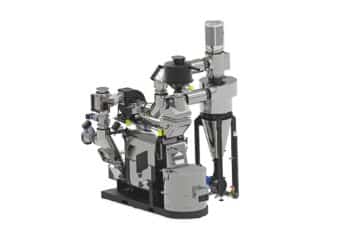
As for what’s next, the company is busy designing miniature versions of its technologies, allowing start-up and boutique manufacturers to also use this unique equipment. It follows a quiet COVID period for the company that used the downtime to develop a SCC the size of a desk – its original miniaturisation project.
“And now that miniature SCC is selling around the world to new and old customers seeking a smaller system so they can do their own trials before incorporating the full-scale process into their factory,” he says.
“That was another flashpoint in our journey, in terms of evolving what we do.”
Despite its global reach, Flavourtech’s regional roots remain solid – the company was recently awarded the Regional Exporter of the Year award at the 2025 New South Wales Export Awards, and received a Judge’s Commendation at the 2025 Australian Export Awards.
In 2025, the company expanded into more manufacturing space – just across the road from its home base – which Skaliotis says will see a 30 to 40 per cent increase in production capacity.
“The commitment has always been there by the owners to base themselves [in Griffith], and not to manufacture overseas – that’s why we’re one of few technology manufacturing companies based in regional Australia. It’s a very strong community feel,” says Skaliotis.
This commitment is also prevalent in how Flavourtech works with their customers – Skaliotis says the company makes a considered effort to ensure customers are supported in every step of the equipment acquisition process.
“We see ourselves as a long-term partner, which is why we don’t just supply the equipment; we ensure its success through full commissioning, technical and application support offered by our talented technical and R&D teams,” he says.
“We are able to customise systems to suit specific requirements and solve customers’ processing challenges. In short, our technologies help make better quality products, more efficiently, leading to customer success.”
For more information, visit flavourtech.com
This article was first published in the January/February 2026 edition of Global Coffee Report. Read more here.