The University of California (UC), Davis, has received three significant collections of coffee related materials for its library, including from Co-Founder of Starbucks and former President of Peet’s Coffee, Gerald ‘Jerry’ Baldwin.
UC Davis claims its Coffee Center is the first academic research and teaching facility in the United States dedicated entirely to the study of coffee.
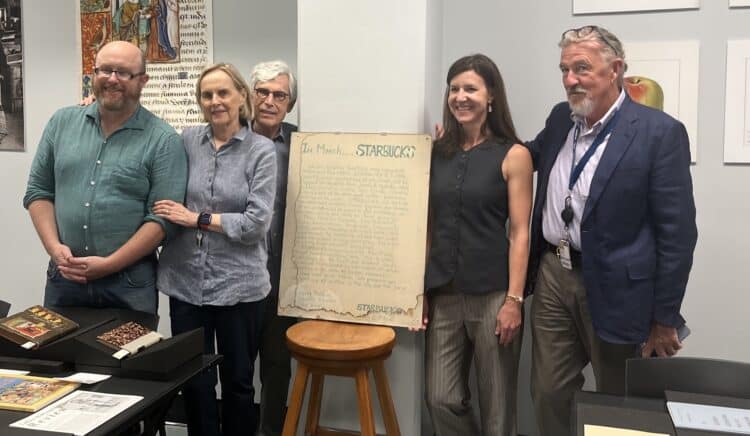
Among Baldwin’s donations to the college are a handwritten manifesto that was displayed outside the original Starbucks location in Seattle, Washington, the company’s first guest book, early financial records, original tasting score sheets, and early scrapbooks and photographs.
Baldwin says he hopes his donations can be used as primary historical sources to educate people on the true history of Starbucks.
“The amount of apocrypha that flies around the internet is huge,” says Baldwin.
“My hope is people who are interested can turn to these documents as a reference and understand what it was truly like at the beginning.”
President of Hacienda La Minita and veteran of Green Mountain Coffee, Russ Kramer, has also donated new materials to UC Davis, including documents related to coffee markets, international trade, and product development.
He has also donated a range of rare books acquired and donated in partnership with Distant Lands Coffee, one of which – Le bon usage du theì, du caffeì, et du chocolat pour la preservation & pour la guerison des maladies – was written in 1687 by French physician Nicolas de Bleìgny.
The title of the book translates to The proper use of tea, coffee, and chocolate for the preservation and healing of diseases.
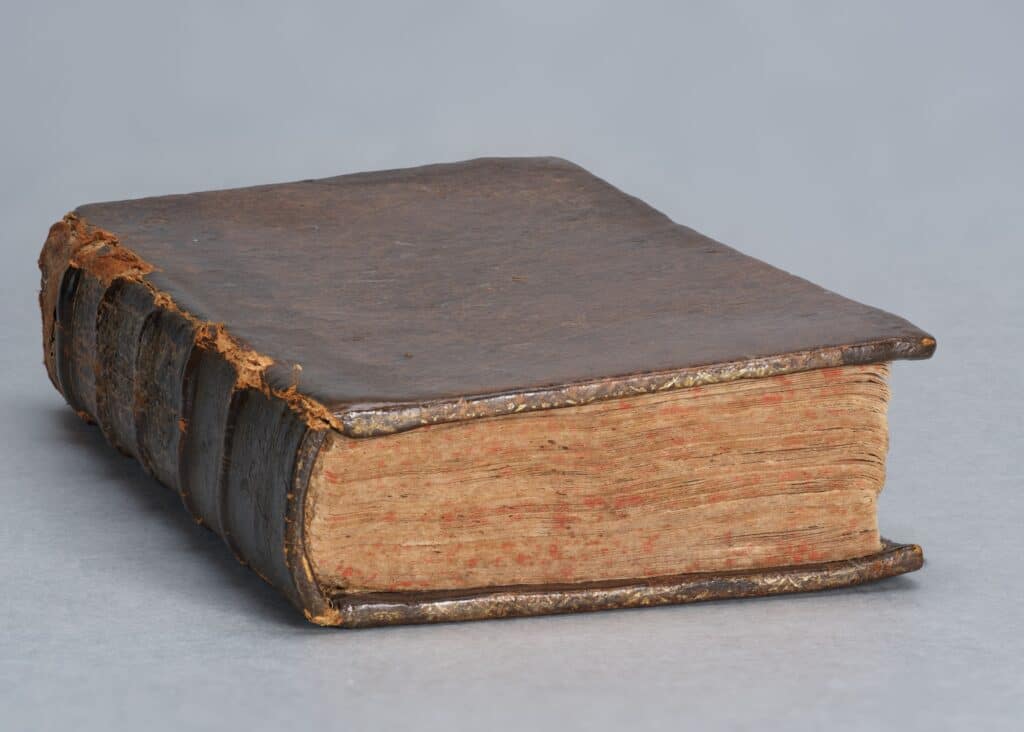
published by French physician Nicolas de Blé gny in 1687. Image: UC Davis.
Finally, the Specialty Coffee Association donated more than 100 boxes or organisational records, early publications, and industry documents.
Kramer says he hopes all the new donations will enable the world to review the history of coffee, objectively.
“There are people all over the world with a lifetime of knowledge on coffee they’ve collected, and it’s sitting in isolation,” he says.
“What the library offers is the opportunity for a generation to bring that all together in one, objective place.”
“The UC Davis Library will be the centre of the world for coffee research — without a doubt. I’m convinced of that.”