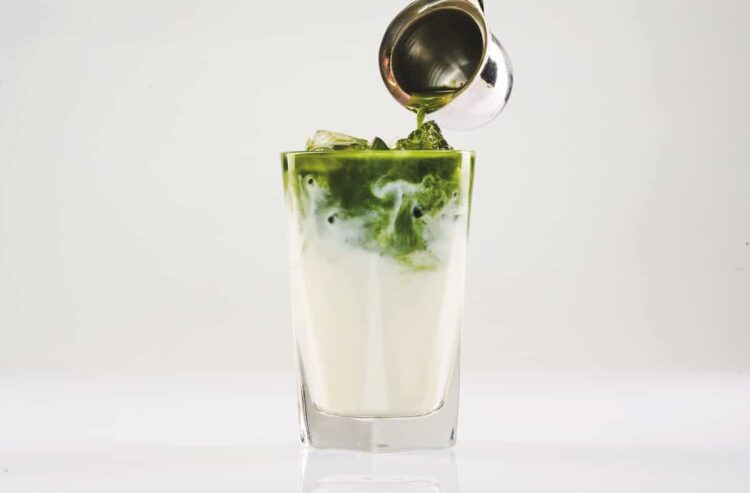
As matcha surges in popularity, could the centuries-old coffee market be facing a real rival?
Could coffee’s reign as one of the world’s most popular beverages be coming to an end? In an era when coffee has become more than just a drink but part of a lifestyle, it’s hard to imagine.
Yet, a quiet and consistent contender has emerged in recent years. Matcha is quickly ascending the ranks to be the beverage of choice, especially among younger generations.
Once the preserve of traditional Japanese ceremonies, the green-tea powder has entered the mainstream in Asia and the West. It’s made its way into cafés, restaurants, syrups, and ready-to-drink options around the world.
With new beverage trends sweeping social media platforms – often rising as quickly as they fall – will the green caffeinated drink be the next staple beverage or just another trend to pass by? Global Coffee Report delves into the world of matcha to explore whether coffee has a serious new competitor.
The origins of matcha
Matcha’s roots trace back to ancient China, originating during the Tang Dynasty from the 7th to 10th century. To make green tea easier to transport, growers began drying and grinding tea leaves into a fine powder, which they mixed with salt water and pressed into bricks. This practical innovation led to a new way of consuming tea, and by the 13th century powdered green tea had become popular, especially among Buddhist monks.
It was during this time a Japanese monk studying Zen Buddhism in China encountered the powdered tea and brought it back to Japan. He referred to it as “the elixir of the immortals”. By 1271, the Japanese had refined both the cultivation and preparation of matcha, developing a unique shading technique that gave the tea its iconic green colour.
Fast-forward to 2025 and the vibrant green drink is a social-media star. One company that championed matcha before the online craze is Australian tea company T2.
“We’ve been selling matcha for around 25 years now,” says Sally Morris, Head of Tea at T2.
“Our matcha was initially stocked in small quantities, tucked away for those with a very keen interest in the Japanese tea ceremony. We were our Japanese matcha producer’s first international export customer, so we have a long history with this tea.”
From niche to necessity
While T2’s early sales of matcha were modest, everything changed in 2016 when the brand launched its first flavoured matcha and introduced the world’s first matcha flask – a portable, shaker-style whisking tool.
“That was when we really started to carve out a niche,” says Morris.
“Nothing, however, compares to the past two years where we’ve seen matcha and its associated accoutrements take the top spots week after week.”
Morris says the catalyst for the change was Gen Z. Today’s younger consumers are fuelling matcha’s meteoric rise, and social media is the main driving factor behind trend.
“This generation has quickly cottoned on to the fact that matcha is infinitely more social media-worthy than coffee,” she says.
TikTok and Instagram creators, influenced by aesthetic beverages from popular cafés, began crafting and posting their own visually pleasing matcha drinks, which are often paired with trending flavours like strawberry. This combination of visual appeal and versatility has turned matcha into what T2 calls “a global cultural moment.”
“Some of the Gen Z matcha drinkers who discovered it through strawberry matcha lattes are now posting videos on TikTok comparing Shizuoka versus Uji harvests,” says Morris.
“There is a new wave of matcha fandom that has emerged in the past few years alone. What started as a social media craze has turned into a real appreciation for high-quality matcha across generations – for the health benefits, flavour, ceremony, and everything that can be done with it.”
While the drink’s appearance certainly helps on visual platforms, it’s also the taste that has won people over.
“I think people now actually really like the taste of matcha, which I wouldn’t have been able to say a few years ago,” Morris says.
Health benefits
Another driver of matcha’s popularity is its health benefits. Unlike coffee’s bold caffeine hit, matcha contains L-Theanine, an amino acid that has a calming effect to offset the caffeine buzz.
“It’s a smoother, more sustained energy experience – one that’s increasingly appealing to younger consumers looking for balance,” says Morris.
The health benefits are strongly linked to matcha’s vibrant appearance. Morris emphasises a high-grade matcha should be “a bright and grassy green,” have a talcum-like texture, and taste “smooth and grassy” rather than hay-like.
“Western classifications such as ceremonial and latte grade are marketing terms. Japan doesn’t actually use them,” she says.
“Foam is often misunderstood too. A very foamy matcha indicates the skill of the person whisking and the presence of saponins. But more foam doesn’t necessarily mean better matcha as some of the highest quality powders may foam less, especially if they’re naturally sweeter and milder.”
Matcha vs. coffee
While matcha is making leaps and bounds in popularity, will it ever be able to overtake coffee? Morris outlines its potential, but says it’s still establishing itself as a real competitor.
“Coffee remains about 50 times the size of the matcha industry globally,” she says.
Japanese matcha production has also hit capacity, with environmental factors causing a 20 to 30 per cent drop in yield in 2025 alone. Morris highlights some matcha producers are refusing new customers.
“The whole world is currently scrambling to secure supply,” she says. “However, there is now opportunity for Chinese tea gardens to significantly premiumise cultivation and processing methods.”
It’s not just the tea industry that has noticed the surge of matcha’s popularity. Nearly all major coffee chains – including Starbucks, Dunkin’, Blank Street, and Peet’s Coffee – have added matcha ranges to their menus.
The Coffee Club, one of Australasia’s leading café chains, has embraced this trend as it aims to position itself as a pioneer in bringing matcha to the mainstream.
The chain’s entry into matcha began in November 2024 with the launch of four drinks: the Iced Strawberry Matcha Latte, Iced Mango Matcha Latte, Matcha Latte, and Iced Matcha Latte. The brand noticed that while matcha was trending in independent cafés, no major chain in the region had made it conveniently accessible.
“We identified that matcha, and in particular the strawberry matcha, was a growing trend,” says Nikki Price, General Manager of Marketing & Product at The Coffee Club.
“We wanted to be the first to make it available in the mainstream market in Australia.”
According to the chain, the launch was extremely successful, leading to the introduction of seasonal favourites such as the Iced Blueberry Matcha Latte. Yet, rather than overtaking existing coffee sales, matcha has carved out a distinct and lucrative niche.
“The Matcha range has driven incremental sales growth in our cold and hot drink categories,” says Price.
“Not only has it opened up a new beverage category, but it has also acted as a springboard for further drink innovations, such as the recent Dubai chocolate–inspired Pistachio range.”
According to third-party data cited by The Coffee Club, 56 per cent of Gen Z beverage orders are for cold drinks. This statistic is in stark contrast to Baby Boomers, who opt for hot beverages 86 per cent of the time. The company found the vibrant look and layered presentation of drinks like the Iced Strawberry Matcha Latte make them especially appealing for social media, further fuelling their popularity.
This article was first published in the November/December 2025 edition of Global Coffee Report. Read more HERE.