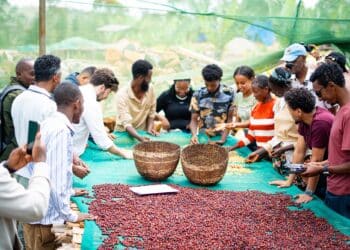
A decade-long study from Dilla University has highlighted the significant role of environmental factors and management practices in shaping Ethiopian coffee yields and quality.
Through principal component and cluster analysis, the research team examined data from topography, climate, soil composition, and farming practices from 18 rural kebeles (districts) in the region over a decade – an innovative approach the authors say enabled them to uncover distinct factors influencing coffee growth and quality, offerings actionable insights for improving coffee farming practices tailored to specific local conditions.
Ethiopia is the fifth-largest coffee producer globally, with the crop accounting for 24 per cent of the country’s foreign exchange earnings.
Climate change and variability in rainfall and temperature patterns are significantly impacting Arabica coffee production, which thrives in specific climatic and topographic conditions.
The study provide practical recommendations for farmers, agricultural planners, and policymakers in Ethiopia.
“By understanding the specific factors influencing coffee production in each cluster, tailored strategies can be implemented to improve yield and quality. For example, in the Konga cluster, increased use of compost and soil amendments such as liming could enhance coffee quality, while in the Wotiko cluster, introducing frost-tolerant coffee varieties and adjusting water management practices would improve productivity,” say the authors in a statement.
“This research underscores the need for cluster-specific strategies to address environmental constraints and optimise resource use.”