The recently announced new delays to the European Union Deforestation Regulation (EUDR) have split the coffee industry. While over the course of the past year, some – including Giuseppe Lavazza – have called for delays, others – including Nestlé and Mars Wrigley – wrote to the European Union (EU) to discourage any further shifting of the timeframe.
After initially being meant to come into effect at the end of 2024, the EUDR will now not be implemented until the end of December 2026, following the European Parliament voting in favour for a second delay earlier this year, 402 votes to 250.
While the EUDR will immediately impact a range of coffee and coffee-related businesses in the EU, it’s influence will be felt across the entire coffee supply chain once it is in full force.
The United Kingdom’s (UK) Pact Coffee has long been a leader in sustainable and traceable coffee sourcing. The brand’s Director of Coffee and Social Impact, Will Corby, says there is still significant impetus for companies to ensure they supply chains meet the criteria as soon as possible.
“The last delay was ultimately due to a lack of readiness and infrastructure,” Corby says. “This year huge swathes of the coffee industry are better funded and more prepared for compliance, but not everyone is quite there yet and some will be really lagging behind.
“When we think of postponement, we think of it purely from a coffee standpoint, but there are other commodities and the many, many elements of their supply chains involved.”
Although the EUDR has been designed to hold European businesses more accountable to the origins of the range of agricultural products covered by the regulation, there is still an onus on smallholder farmers and producers from these origin countries to bring their operations up to speed to meet compliance.
The Kenyan government embarked on a mission to geomap all coffee farming parcels of land in the country in July 2025.
At the time of the announcement, a statement from the Kenyan Agriculture and Food Authority (AFA) said just 30 per cent of the “national coffee area” in 16 out of 33 counties had been geomapped, or 32,688 hectares.
Corby believes the added delay to the EUDR gives smallholder farmers crucial time to continue to prepare themselves for the regulations.
“Many smallholder growers lack the capacity to carry out the farm geomapping required for EUDR compliance. This could potentially lead to a situation where an exporter maps the farm and locks the grower into selling coffee exclusively to them, as they control the resulting data package,” he says.
“The grower doesn’t necessarily need to understand the technology; they just need access to a market of exporters who can map and manage simple packages of transferable data. This would mean the grower is still open to selling to a wide range of exporters or roasters to get the best prices for their coffee.
“Delaying EUDR implementation gives us another 12 months to figure out how we can help growers to reach that point, and that’s only going to be constructive to truly ethical sourcing.
“Also, the fine of compliance is very high, so the risk of getting it wrong is enormous. This delay will be welcome for those that are well-intentioned, but who may have not tested the pathways to compliance that they’ve put in place.”
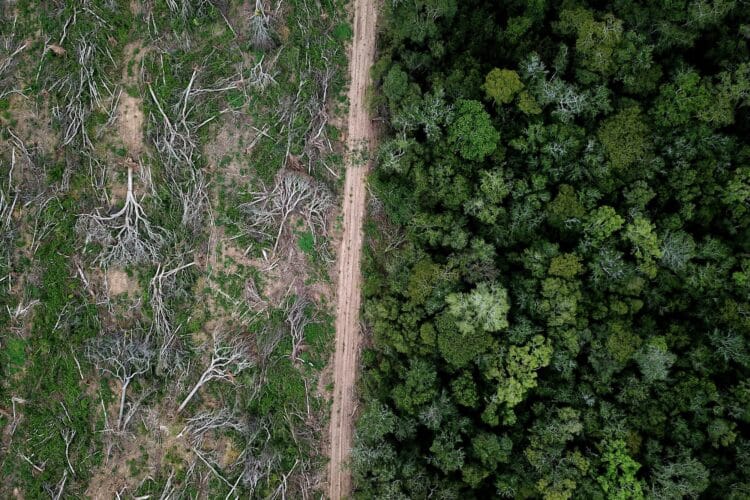
With the window for coffee businesses to align their operations with the EUDR now extended a further 12 months, it remains to be seen what impact the delays have on the current deforestation and forest regeneration issues facing origin countries.
Corby believes that since large parts of the coffee industry were already prepared for the December 2025 due date, we could already see some impacts from the EUDR in 2026 despite the delay.
“Even if the implementation has been delayed, finding the way there still puts impetus on every EU roaster and exporter to know the grower and farm behind their coffee. Huge companies are now putting a significant amount of effort and money into making this happen,” he says.
“This leads to a significant positive impact, developing traceability for tens of thousands of coffee growers all round the world.
“As a company that has long championed the positive impact of transparency in the supply chain, we’re really excited to see how this impacts the people behind coffee all around the world.
“Since we started at Pact, 13 years ago, all our coffee has been 100 per cent traceable and sourced from growers that we work with on a long-term, mutually beneficial basis. Through traceability, we can guarantee that the grower is paid a truly fair price, and this allows the world’s most talented coffee growers to thrive.”