Starbucks’ new Digital Traceability tool transforms each bag of coffee beans into a digital passport, launching coffee drinkers on a virtual expedition to meet farmers, roasters, and baristas, and to explore coffee-growing regions around the world.

The global coffee chain says millions of its customers who reach for their favourite coffee each day may not realise the journey it traveled to reach them, or the many people who make each cup possible.
“We’ve always known where our coffee comes from as part of [Coffee and Farmer Equity] (CAFE) Practices, our responsible sourcing program, but now, with this tool we have the opportunity to transparently share that information with everyone,” says Michelle Burns, Senior Vice President, Global Coffee, Tea and Cocoa at Starbucks.
“Every coffee has a story to tell, and I could not be more excited for people to be more connected to the whole coffee experience, from bean to cup, and meet the many people whose hard work, time and attention makes coffee possible.”
Using a mobile device or laptop, consumers can visit traceability.starbucks.com to scan or enter the number on the back of any bag of whole bean coffee at Starbucks stores in the United States.
The mobile web app will take them to the part of the world where that coffee was grown, introduce them to some of the farmers growing coffee there, and meet some of the roasters who transformed the green coffee beans into their preferred roast. It’s not mandatory to scan a bag of coffee to use the tool and people can explore the mobile web app anytime.
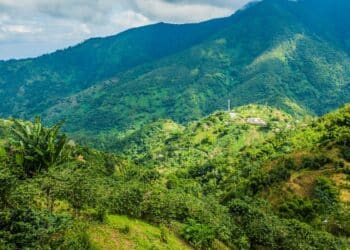
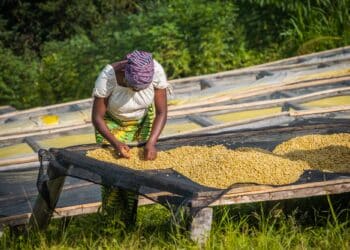
“Want to visit Papua New Guinea? The traceability tool will take you to this mountainous island nation off the coast of Australia where much of the coffee is wild grown on small plots next to farmers’ personal gardens. Or travel to China and meet Cai, who used to be a truck driver but wanted to change his life, so he sold his house and moved across the country to Pu’er, where he bought a one-hectare farm (about 2.5 acres),” reads a release form Starbucks.
Though he had no coffee-growing experience, Cai immersed himself in training and education, including taking classes through the Starbucks Farmer Support Center in Yunnan and adopted CAFE Practices to become a Starbucks supplier.
“I think people might be surprised to know that any farm can produce high quality coffee if farmers pursue that as their goal, even small farms like mine,” Cai wrote. “I hope that people truly enjoy the coffee. I also hope more and more people become familiar with and love Yunnan coffee.”
Developed in collaboration with Conservation International, a non-profit committed to environmental protection, CAFE Practices launched in 2004 as a comprehensive set of social, economic, environmental, and quality guidelines for how coffee should be ethically sourced.
“What I love most about this tool is how it takes coffee drinkers directly to the places where coffee is grown and to the people who grow it. This is where Conservation International and Starbucks’ mission to make coffee truly sustainable began, and where the heart of our work will always be,” said Bambi Semroc, Conservation International’s Senior Vice President for Sustainable Lands and Waters.
“The traceability tool is more than transparency for the consumer – it’s a journey that brings coffee drinkers along with us on our efforts to support the farmers – and nature – that make coffee possible.”
Starbucks says Conservational International has continued to be a key partner and even helped collect critical feedback from farmers like Cai, that provided insights into how Starbucks could leverage traceability to further support farmers.
Abigail Kroon, Traceability Manager on the Starbucks Global Coffee Team, helped develop the tool, and says there are many more stories like Cai’s, which is why Starbucks is so excited to have a way to share them with partners and customers.
“Growing coffee, particularly at the quality and rigor required by Starbucks responsible sourcing standards, is not easy, and it’s exciting to get to share the stories of the coffee producers who make it happen,” Kroon says.
“They are a huge part of our daily cup of coffee, and with traceability we can make that connection more direct.”
The new traceability tool, developed in partnership with Microsoft, is valuable to farmers as well, who are proud of the coffee they grow but who don’t always know the final destination of their green coffee beans after they harvest and sell them, she said.
“With this platform we also have opportunity to share more information with coffee producers about where their coffee went and what it became,” Kroon says. “For many farmers growing coffee is more than just a job, it’s their passion and their life’s work – work that is celebrated and enjoyed around the world.”
For more information, visit www.starbucks.com