With the popularity of regenerative coffee rising, could this type of sustainable bean not only be the next great global business opportunity, but help ease pressure on the industry?
The rise in environmental consciousness has brought about a new era of sustainable action, spanning everything from large-scale global plans like the Paris Agreement in 2015 to smaller but notable interventions such as investing in renewable energy or curbing deforestation. The coffee industry has been far from immune to this desire to protect the planet – in fact, it has often led the way and continues to do so.
The limited number of nations in the bean belt capable of growing coffee plants, plus rising demand for coffee and coffee-based products, beans are already in short supply.
Add in worsening environmental factors, prevalence of diseases like coffee leaf rust, and the potential loss of key agricultural land, then the existing headache has the potential to turn into something far more serious – and fast.
These changing goalposts have seen a rapid rise in a new type of sustainable initiative in the coffee world – one that is enacted at origin but supported by consumer demand and big coffee businesses: regenerative farming.
Regenerative coffee farming diverts from more typical commercial farming methods like clear-cutting trees, single-crop plantations, and heavy use of chemical fertilisers and pesticides.
Instead, practices like cover cropping, shade management, intercropping, and integrated pest management are used to help the land remain healthy and productive moving into the future.
Swedish roaster Löfbergs recently passed a milestone in its own regenerative coffee movement by celebrating its first purchase of Regenerative Organic Certified (ROC) coffee from Nicaragua.
The roaster has always prided itself on being a leader of environmentalism in the coffee space. Head of Sustainability Kajsa-Lisa Ljudén says comparisons can be drawn between the early modern shift towards regenerative coffee and the rise of organic coffee in the 1990s and early 2000s.
“In 1995, Löfbergs was the first to import a container with organic coffee into Sweden. Back then it was new and unknown, and we had no demand for it from customers, but we knew it was important. We wanted to promote these organic practices, and today we’re one of the biggest importers and roasters of organic and Fair-Trade certified coffee in the world,” says Ljudén.
“That’s a great example of the industry leading the demand, and there are parallels here. While we have little demand for this coffee from customers today, we have already discussed it with a lot of our customers and been met with optimism, curiosity, and excitement.”
Given Sweden’s reputation as a frontrunner in emerging coffee trends, Ljudén believes Löfberg’s home market holds potential for the product alongside the likes of the United States (US), United Kingdom (UK), and other Nordic nations.
The belief in the opportunities of these markets is echoed by Expocacer Commercial Director, Ítalo Henrique.
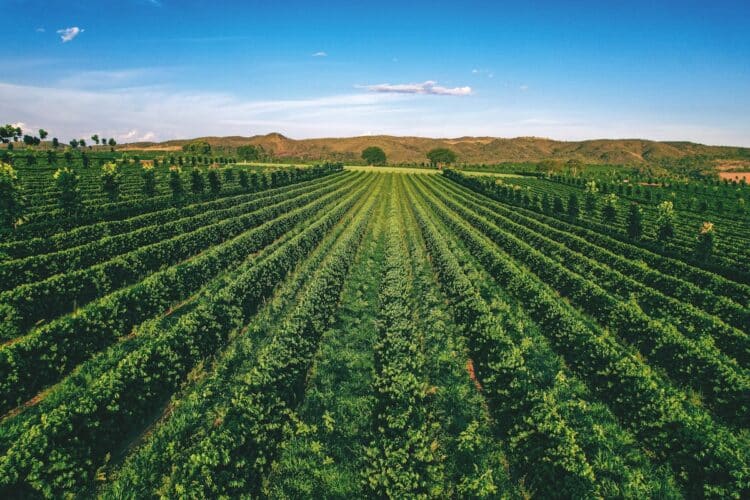
Expocacer is one of Brazil’s largest coffee cooperatives. Located in the powerhouse production region of Cerrado Miniero in the state of Minas Gerais, it has dedicated 21,000 hectares of agricultural land – or, as Henrique puts it, roughly 21,000 football fields – to regenerative coffee production.
He says the UK is rapidly emerging as a key market for the product, but others are not far behind.
“Europe remains the main market for regenerative coffees, but the United Kingdom is also beginning to show increasing interest in coffees with a sustainable identity,” says Henrique.
Thanks to the commitment of Expocacer’s cooperative members toward integrating regenerative practices into their production processes, the cooperative could expand its supply of Regenagri-certified coffees to the British market by roughly three times in 2025 in comparison to the last year. Market demand also continues to grow through the commercial team’s efforts, as producers maintain their visionary perspective on sustainable production, origin, traceability, and ESG compliance.

British buyers are increasingly demanding verifiable sustainability data and full traceability back to the producer, more so than even organic or Rainforest Alliance labels.”
Henrique believes this rapid growth seen in the UK market is accelerating ahead of the rest of the world, however as large scale consumer markets conscious of sustainability continue to demand more from their coffee, the call for regenerative products will only increase.
“The UK’s US$4.8 billion coffee market is expanding at more than six per cent per year, with specialty coffee growing above 10 per cent and regenerative coffee increasing at an even faster pace,” he says.
“We are seeing higher levels of interest, including increasing pre-orders and the adoption of regenerative coffee offerings by major buyers such as large technology companies, premium roasters, and corporate hospitality groups.
“As climate-related risks evolve, it is likely that more companies will look to regenerative supply chains that offer environmental benefits, resilience, and transparency.”
In markets like the UK – where coffee consumption is rising to 98 million cups a day and sustainability standards are tightening – Henrique says regenerative practices “meet the moment by ensuring both environmental recovery and supply consistency”.
Löfbergs’ landmark ROC coffee purchase came as a result of a trip taken to origin by Ljudén and other members of the roaster’s team. The first beans purchased that met the new requirements came from east Nicaragua, but it was also time in Peru that laid the foundations as something to pursue.
Ljudén says the new certification is gaining some traction in Central and South America but is still something of an unknown quantity.
“ROC is a new certification. We travelled to Peru and met with multiple co-ops that emphasised the need for organic and regenerative practices. We were shown how climate stress and depleted soils pose a risk to long-term coffee yield and quality, and how regenerative practices can create more resilience,” she says.
“It builds on these organic rules and have added requirements for soil health, fairness for farmers and workers, and animal welfare, and it’s designed to ensure real ecological regeneration, and its greatest potential is as an impact driven tool that goes beyond compliance.
“Central America is a real flagship when it comes to these organic and regenerative practices. Everyone is talking about it now, but it’s not a new concept, there are ancient methods from all over the world that promote it.
“You especially see small-scale farmers and family farms with multiple crops intercropping and taking care of the land. It’s not that it hasn’t necessarily been noticed by roasters, but it’s difficult to scale.”
She says the rise in popularity of regenerative coffee is a natural progression in the type of sustainability and environmental work in the coffee industry.
“The industry has talked about and worked with CO2 reductions for a long time, but the focus is generally now more on climate mitigation and resilience. I think that’s why these nature-based solutions, like agroforestry and regenerative coffee, have really gained attention.”
Henrique and Expocacer agree. He says this shift to more regenerative practices – which restore soil health – as opposed to preventative practices – which only prevent damage without recovering what was lost – is essential to keeping agricultural land healthy and thriving.
“Sustainability expectations have evolved from ‘do less harm’’ to ‘restore ecosystems’,” he says. “Regenerative coffee is the natural next step because it measurably improves soil, biodiversity, carbon balance, and long-term farm resilience.
“It’s important to highlight that regenerative agriculture is based on practices that restore natural resources, increase biodiversity, protect water sources, and enhance resilience to climate variability,” says Henrique.
“It has gained importance as producers seek to strengthen their production systems, improve soil health, and ensure long-term sustainability. These methods can reduce production costs, improve environmental performance, and support higher cup quality.”
While Löfbergs is not the only coffee roaster in the world to pursue regenerative coffee as a new initiative, it is one of the largest. Ljudén believes it is the responsibility of those who have the assets to foster a more sustainable industry to do so, but empowerment, not demands, is the way forward.
“There is seldom one single solution to a big problem. I think ROC has a great place in this equation, while the Rainforest Alliance has also come in with its own regenerative certification that we are evaluating. TechnoServe has also done an incredibly interesting study on regenerative coffee that showed the positive effect it can have not only on climate, but the financial health of the farmers as well,” she says.
Ljudén believes the companies that invest in these climate-smart and sustainable practices are the ones setting themselves up for long-term success.
“It’s been a crazy year with volatile prices and different challenges that there are so many insecurities now. That’s why it’s important to have a long-term focus and keep investing in things like this,” she adds.
“It allows us to differentiate and show we are at the forefront and can offer new and sustainable solutions. Our customers expect this from us, but the main benefit is in securing the future of coffee. We need the next generation of coffee farmers to have these resilient systems with continued high yields so they can thrive.”
This article was first published in the January/February 2026 edition of Global Coffee Report. Read more here.